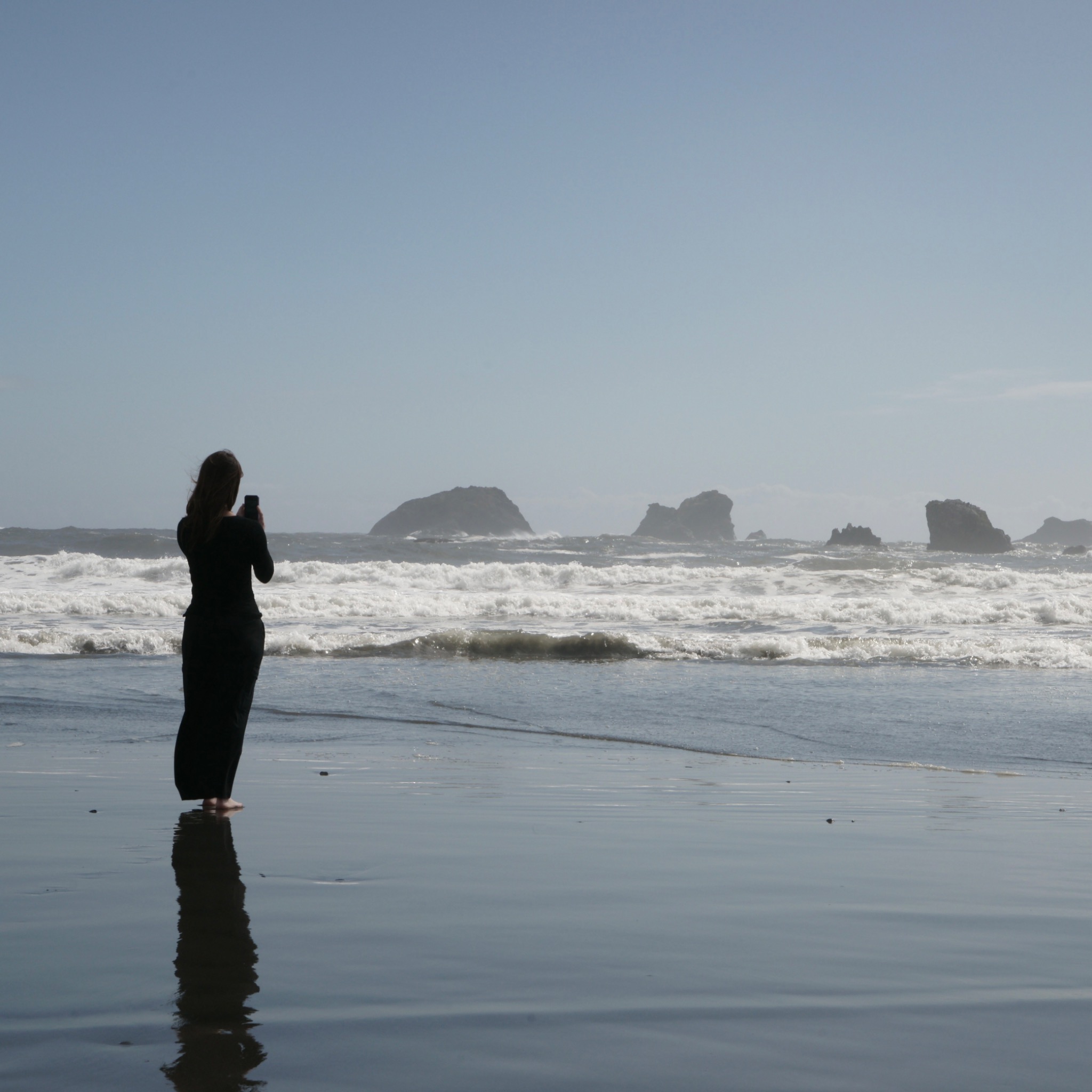
Within Time, Out of Time
Will I be washed away like a footprint in the sand?
I will, I think. I can see the outline of a shoe with an unrecognizable tread next to my feet. The lapping waves of the rising tide seem to come closer, smoothing the sand further down the shore, filling in the empty air between rocks. Certainly, these footsteps are recent—they must be from today, no older. Tomorrow they will be gone and a new set will replace them, and those will inevitably be washed away as well.
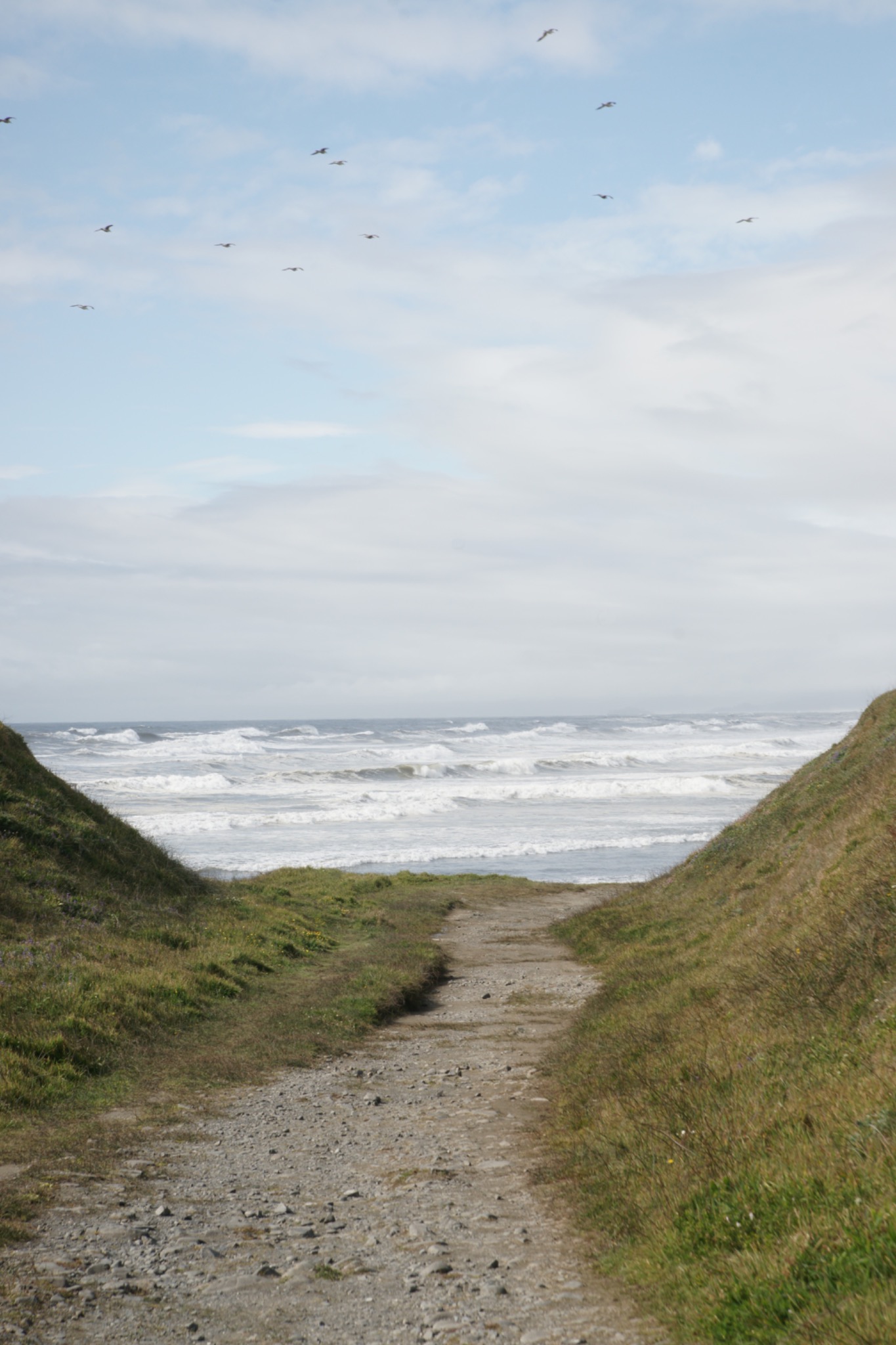
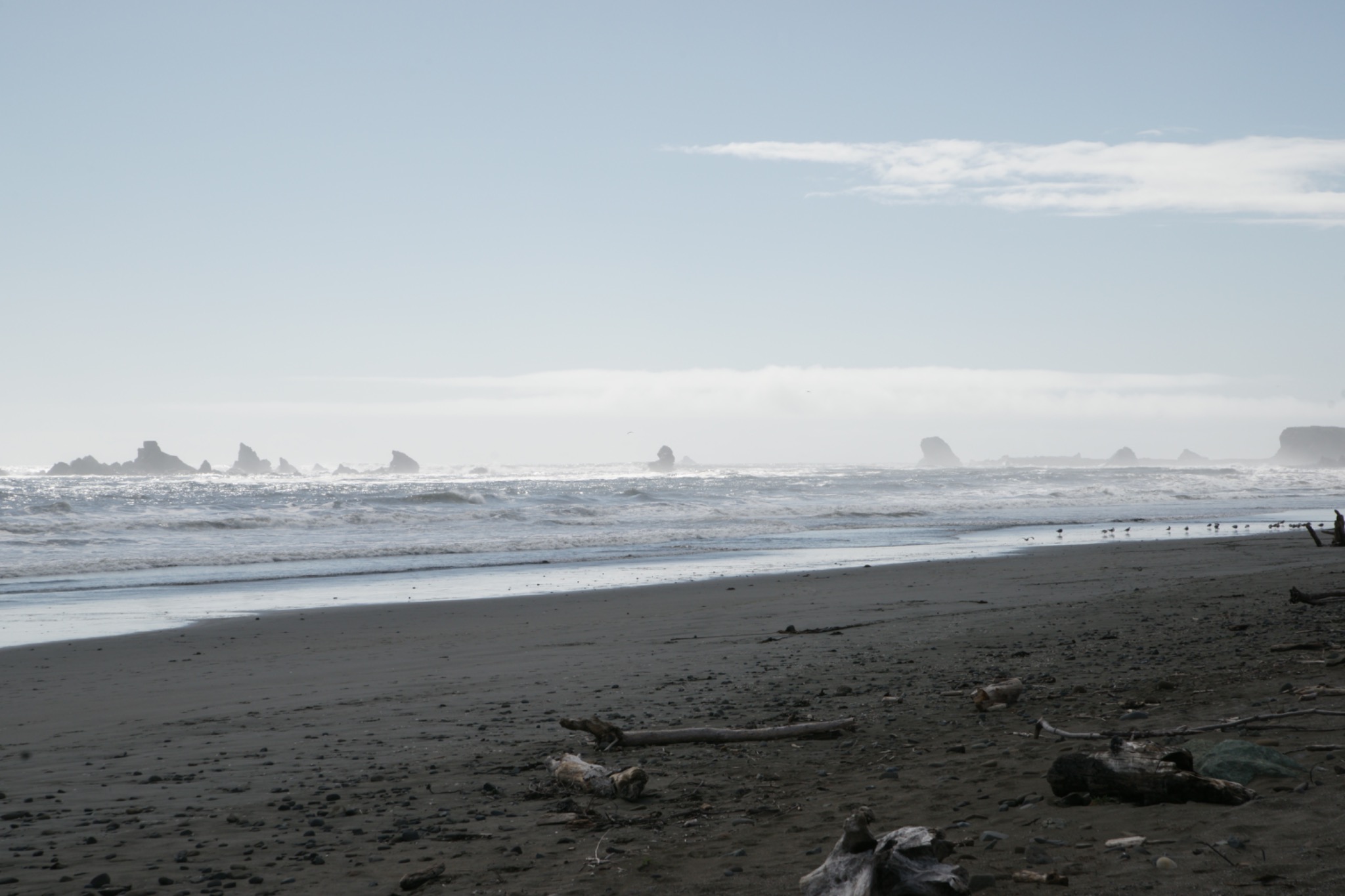
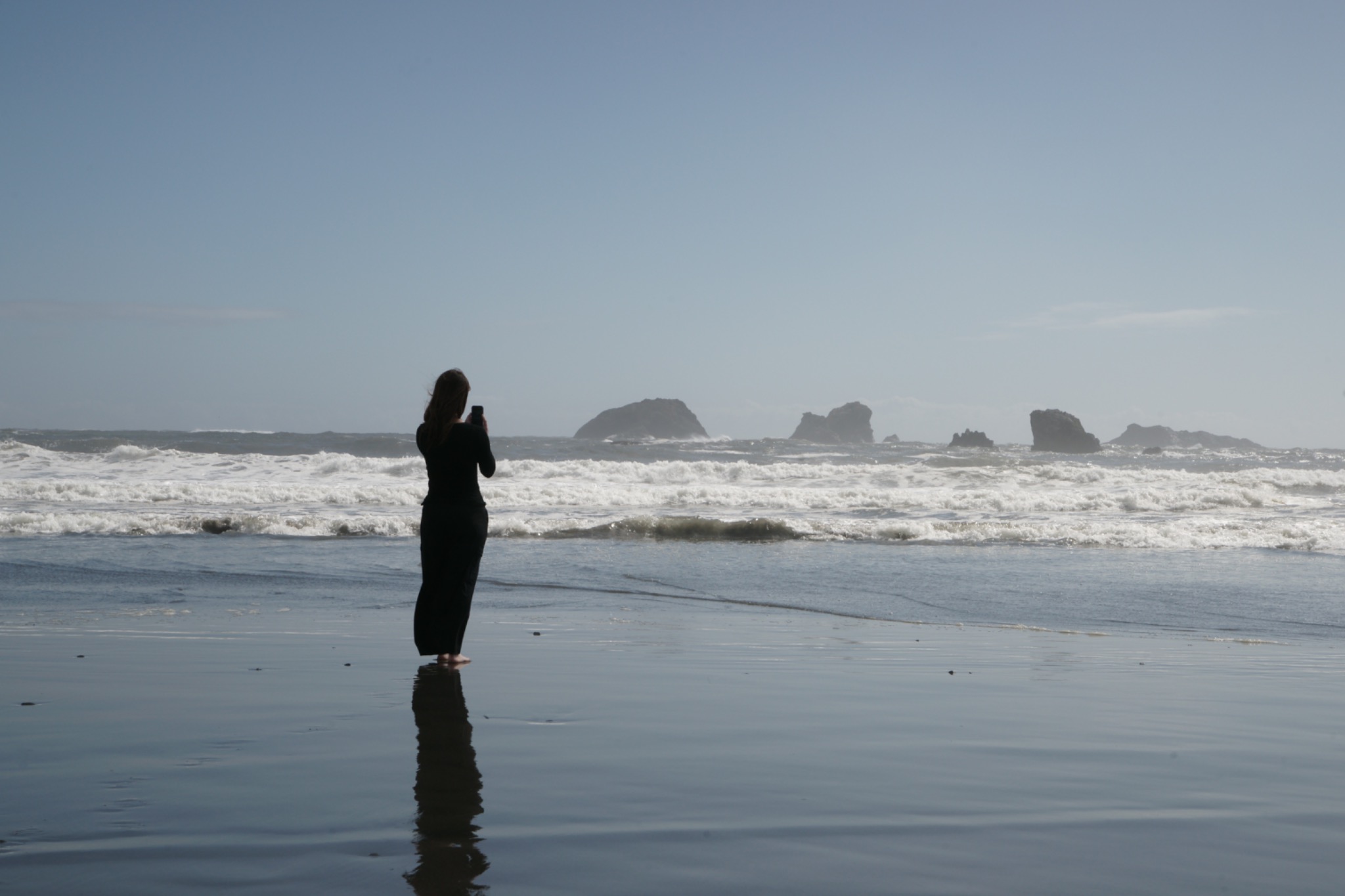
There is no one else around, here, because it’s too vast of a shore and too cold to be crowded. It is only me and the ocean larger than all the land on earth under a sky that is endless. That is how it all feels: endless. The sand continues well beyond my sight, miles to the north and south before it is obscured by sea spray, and on it there is little other than kelp and rocks that have washed ashore. They’ll be swept back out when the tide comes too.
We are all that we have. This is all that we have. We are not made to live forever, not like this, not in the world as it is. If there is a veil that hides us from the rest of the world (or the rest of the world from us), keeping from us the things we do not know, I think it may be at its thinnest here. There are no power lines or houses, no fences or rows, no straight lines or synthetic materials or anything that indicates the presence of man other than these footprints, towards which the water comes ever closer. The way it looks is more or less the way it would have looked a thousand years ago, and a thousand years before that; it is still despite the violent sea, a place outside of time that can somehow still be found within it. Untouched enough that it retains purity, that it seems the sins of humanity could not truly harm it.
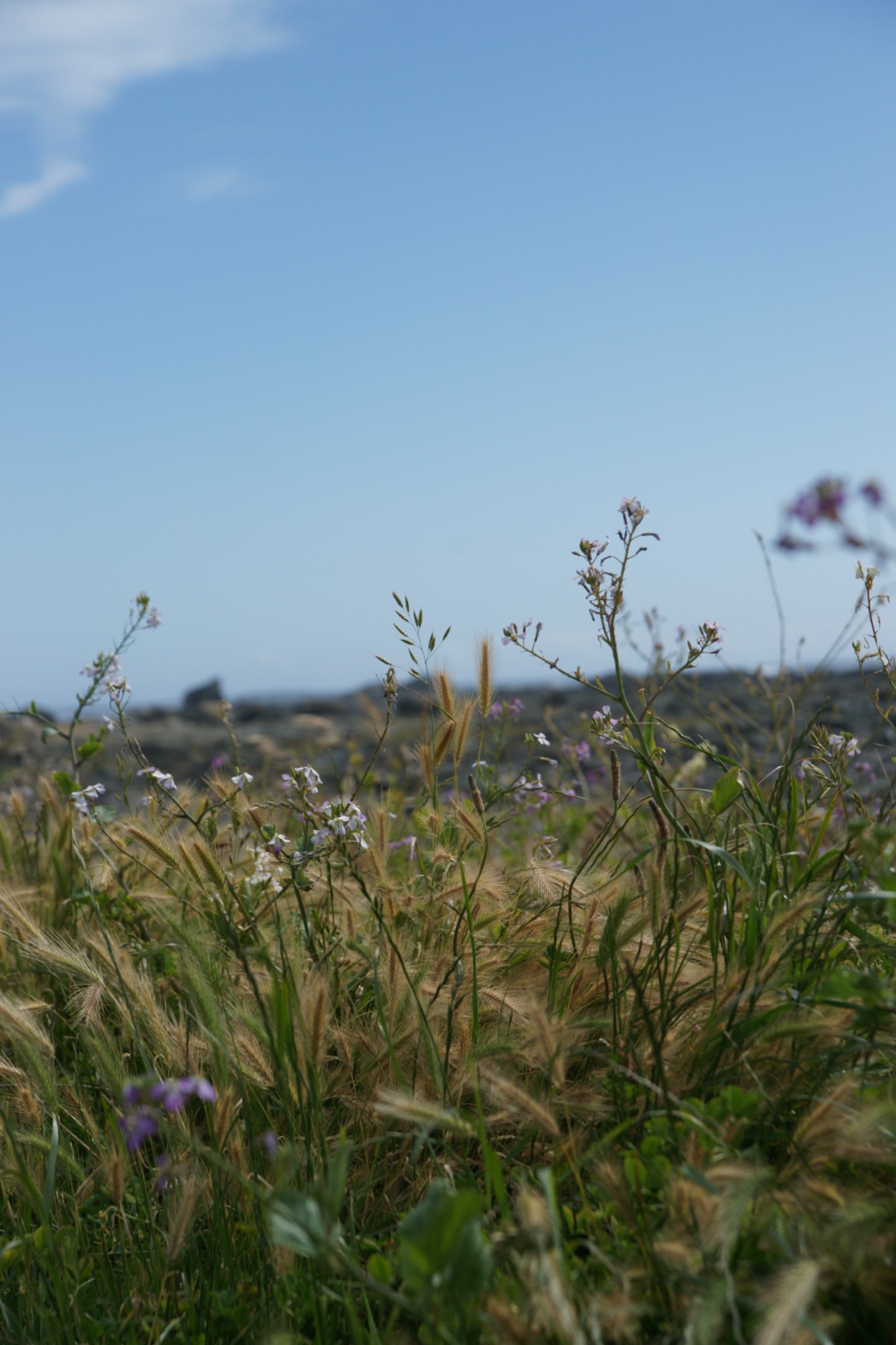
Biennial flowers make me sad, and I avoid them for that reason. I am upset by the thought of a plant that lives for two seasons, to grow leaves and flowers before dying after a life that seems so short. It upsets me more than an annual, and more than a perennial, although they all eventually meet the same end. Death comforts in some ways and frightens in another. I fear death for others far more than I do for myself—it is hard to understand it, hard to fathom it, hard to accept that there is nothing it does not reach.
I suppose that at the end of your life it seems a mercy, the hope you should see, again, that which you love. I could not go through life believing this was the limit. It may be easier for those who have never felt great loss to accept the thought of a truly permanent death, whatever that might mean, but for me it seems far too unfair a reality to consider possible. My father’s footprints were washed away from the shore in front of me before I even had the chance to put mine next to them. How could I accept the belief that the memory of him, cloudier each day, is all I’ll ever have? And truly, nobody knows anything. There is no proof or any reason to believe there is nothingness after death more than there is life. Anyone can claim to have died and seen something, just as anyone can claim to have died and seen nothing—we do not know, and we will not know until it comes for us. It will, as it does for all. The waves do not stop; the tides never cease.
It is by those waves that I feel the most comfortable, because it is there that I think I can imagine death. Not whatever process brings me to it- that, I do not know, and do not think there is much worth in thinking about- but what comes after. It is not hard for me to imagine standing there suddenly when you hadn’t been just a moment before and seeing, nearly out of sight, someone that you love but have not seen for a very long time. It’s not hard for me to imagine the jingling of a dog’s collar, or to see a cat’s tail rise as it runs towards you, making footprints in the sand that, this time, will not wash away. It’s not hard for me to imagine being able to wrap your arms around someone you worried you might not see again and being able to cry over them, not out of sadness, but of the joy that can only be felt out of grief. It’s not hard to imagine the sun never setting, the waves never ceasing, the coolness of the air staying as it was, never too hot and never too cold, because that place seems so out of time. I think that one day we will also be out of time, but not in the sense that we do not have any left—only in that it will not matter anymore.
Time, the hours and days, will all become the way you feel them on the first days of spring when the flowers begin to bloom and the air is warm—there will be no time to cease, no time to leave, no time to reminisce on the day because the day will not leave. It must be like all the moments of joy and peace you have felt in your life, but without end, no inevitable downturn.
I do not know what Heaven should be like, nor does anyone else. No argument could convince me to not believe in something greater than the things we know because believing there is nothing holds no true logic or reason—when have you ever observed something coming from nothing, and when have you observed something without a beginning? How can we explain existence if nothing can exist without a beginning? I am not saying I have a good answer for that question. I am saying that there isn’t, really, a good answer. We do not know. We do not need to know.
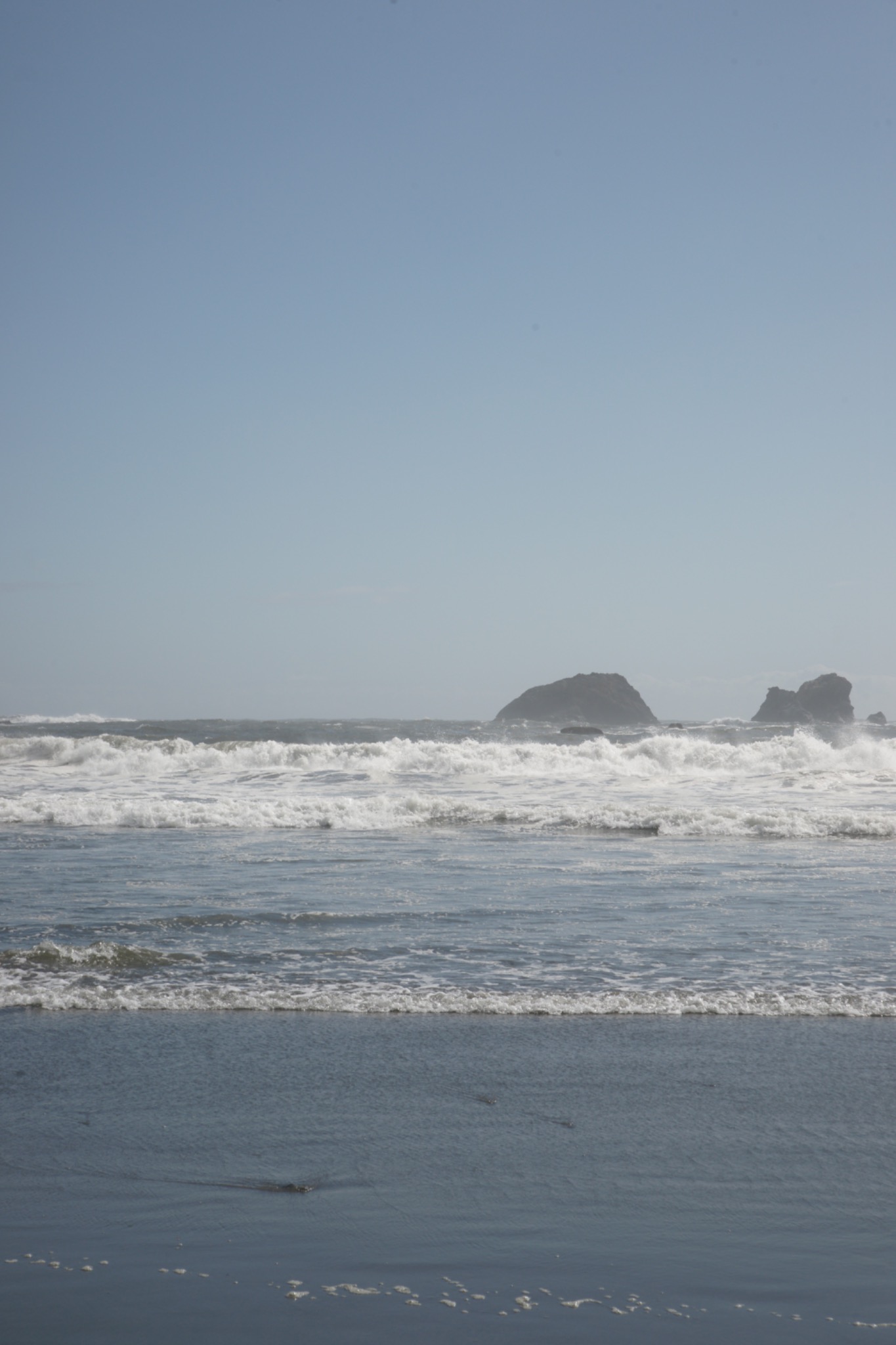
The water covers my feet, this time. The sand gathers around them as it retreats. My footprints are still there, underneath me, undisturbed by the waves; but when I move, as I will move, it will take them back as quickly as it did the others. A human life exists between the fall and rise of the tides. On the dry sand we make our mark, undeniably real and for that moment surrounded by the other things brought by the tide, the seaweed and rocks and shells, the scrambling of sand grains that have been pushed up and brought back down over millions of years. But again, the tide returns as the sun travels across the sky and begins, little by little, to pull back into the water all that had come from it. Eventually it will reach our footprints that we have left, too, and by the next time it recedes there will be new shells, new rocks, new algae, and a shore ready to be seen by eyes other than our own.
We have all come from something, and we must return to it. To live forever in this state would not be worth living at all. Energy is never created, nor destroyed—how selfish can I be to hold onto my own? What have the atoms that make up my form made in the past, if anything? Who and what has died so that I may live?
I do not know. But I would not deny the chance at life to another. I do not understand it, I do not understand life, I do not understand how we were created or what our purpose is beyond vague ideas; I do not understand this, and I do not understand that. There is very little I would claim to understand.
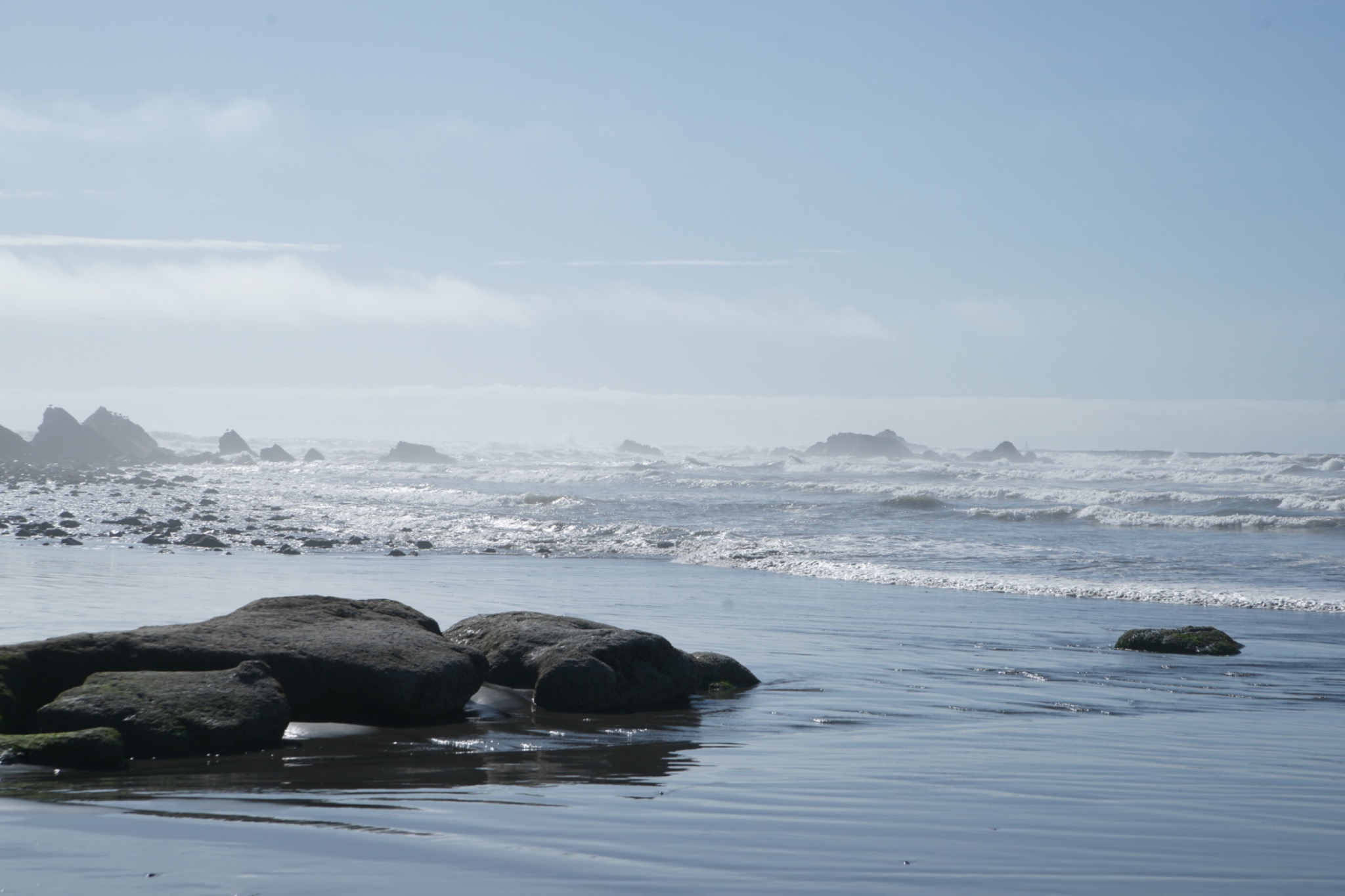
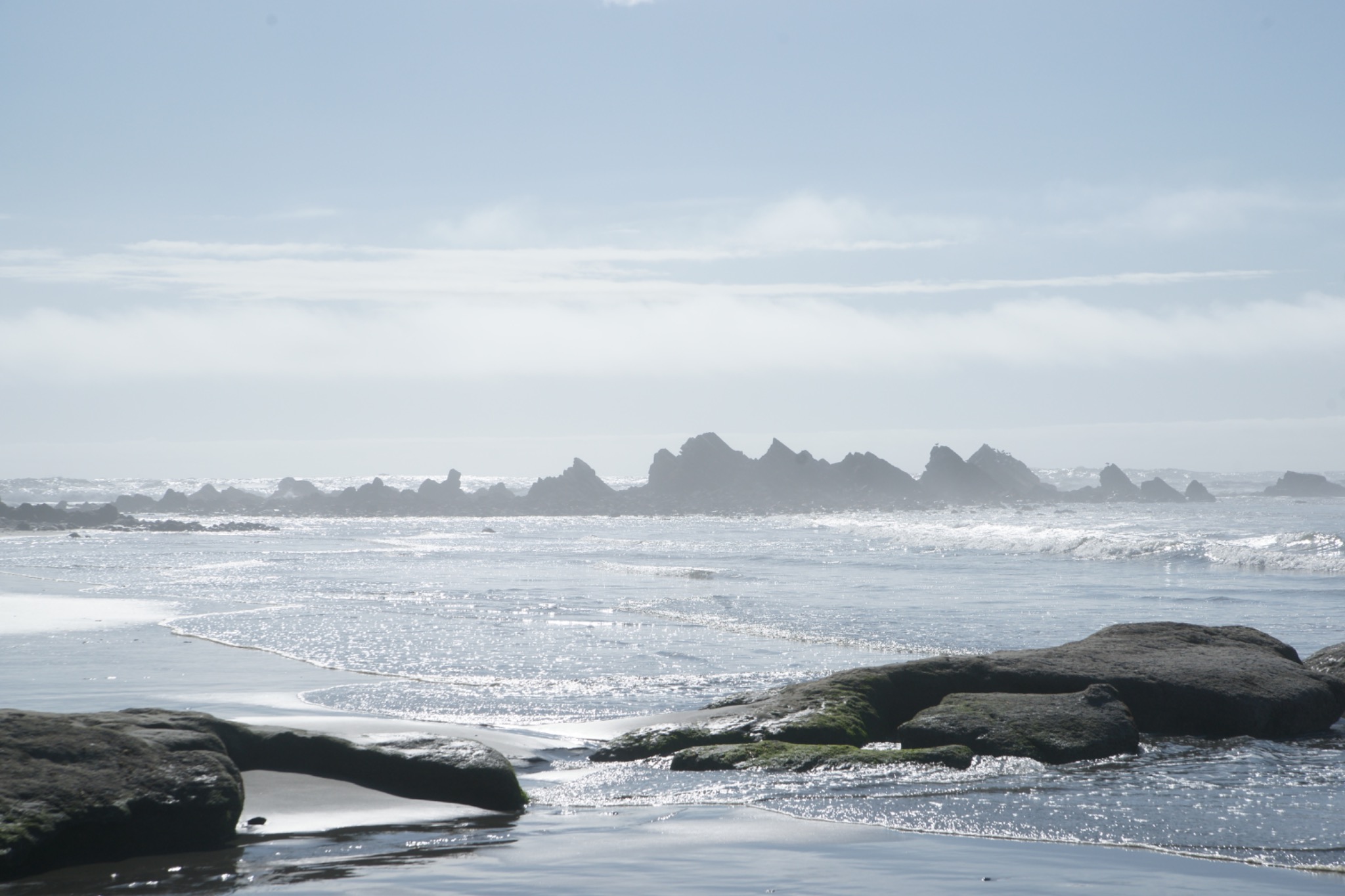
What I do understand is that I do not need to understand. I am alive, here, on this empty beach, surrounded by these black rocks and glittering waves, and for the moment my mark is made—and I know, although I do not see them, that many others have been here and seen things much the same way I do. Oceans do not change, not from our perspective. I should not care if my memory fades from the minds of those on earth because that is the inevitable fate of us all. I should like to return to peace. I should like to return to quiet. I can only hope that involves sitting on a beach as lovely as this.
Post a comment